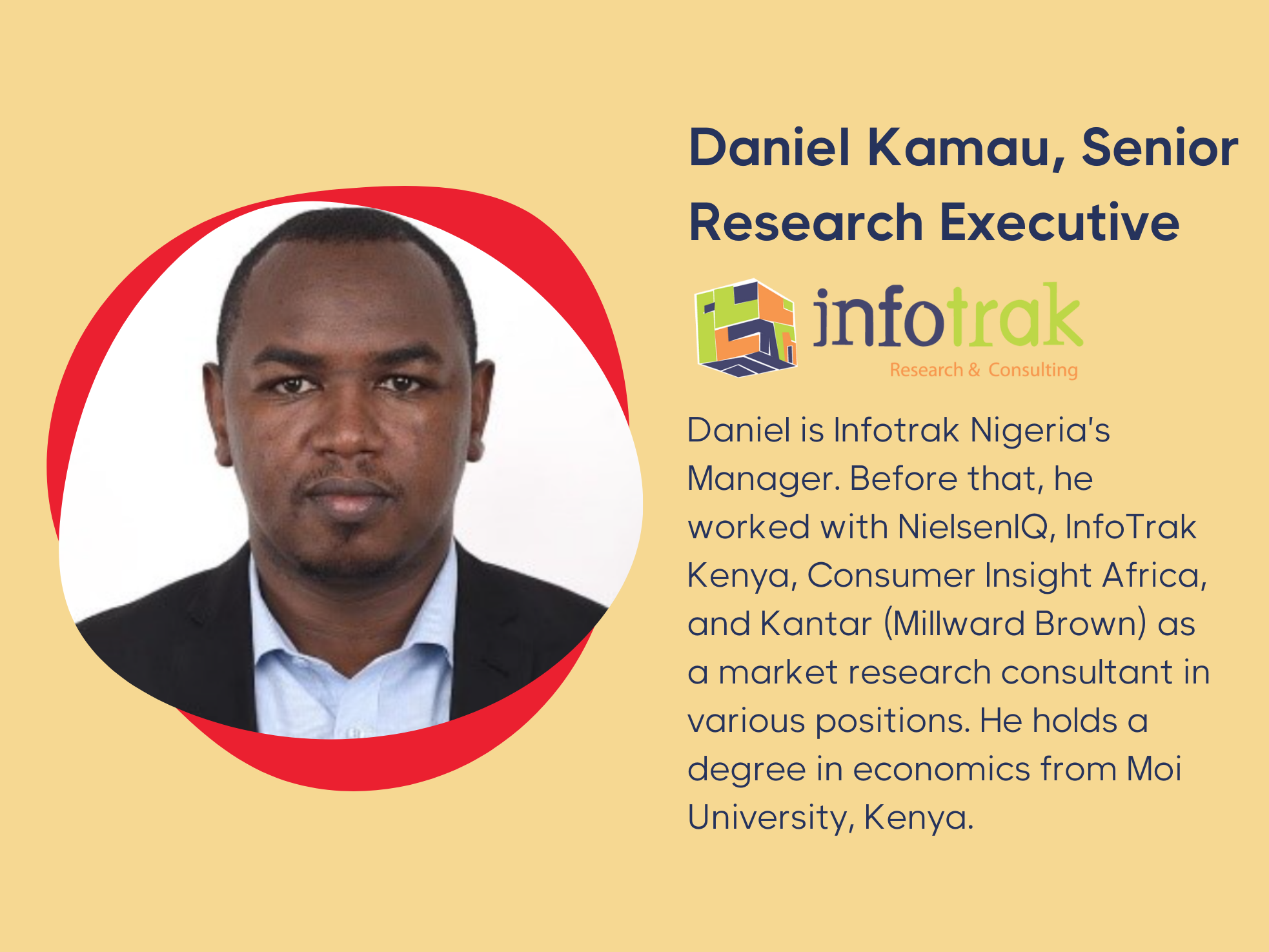
A conversation with InfoTrak’s Daniel Kamau and GroupSolver’s Rasto Ivanic
When it comes market research, there is little doubt that Africa is the least known continent. According to Statista
, about 3-4% of global consumer research spending targets the Middle East and Africa. Perhaps it makes sense. According to Statista
, the GDP of the entire continent at about $3.1 trillion, which is about the size of France
’s (or about 20% larger than the GDP of the state of Texas
) and Africa is not one market, but a diverse mélange of tastes and cultures.
However, what brands today may consider to be a fragmented and underdeveloped consumer market is quickly becoming an important global growth engine. With its young and growing population, immeasurable consumer diversity and its rapid technological advancements, Africa is jumping over stages of usual economic development and quickly finding its place alongside other important markets. Today, approximately 1.5 billion people call Africa home, making it already the 2nd most populous continent, and it is on track to add another billion to its population tally in the next 25 years.
With African market about to surpass that of India in terms of consumers and potentially reaching the size of China and India combined in the next 30 years, brands that are looking for new growth opportunities should start paying attention to the African consumer, understand their tastes and find opportunities to grow together. With that context, what do we know about the young African consumer, the one that will be in its full economic and spending potential when Africa reaches these milestones in a couple of short decades?
We sat down with our partner and market research professional, Daniel Kamau, to talk about market research in Africa, some of the trends and peculiarities brands should be aware of when they start their journey to get to know African consumers.
~
Rastislav Ivanic:
Daniel, we have worked together on several projects in Africa, and the reason why I wanted to have this conversation with you is because I think there is a sizeable gap in what the outside world (the world outside of Africa)knows about the African consumer and what they should know about the African consumer.
Africa is the fastest growing population center and it is probably the future of where the growth of consumer spending will be in the coming decades. But it seems to me that at least for the US companies, the African consumer is largely unknown.
So, my first question to you would be: what should a company—that is seriously considering understanding or entering the African market—know about the current trends? What do you see is happening with the consumers with how they shop, where they look for information? **
Daniel Kamau: ****** There are a number of things that I would say a brand targeting Africa needs to be aware of; #1 is the market potential. As you mentioned, the population is growing exponentially so the markets there are the future. But what this population brings or comes with is the expanding middle-class income who present a compelling opportunity for the brands.
Note: According the African Development Bank, the Africa’s middle-class had tripled to more than 310 million people over past 30 years. This growth translates to a larger consumer base with increasing purchasing power.
Another trend that I would look at is on the youths: Africa has the highest proportion of the youths in the world, with approximately 60% of the African population being aged below 25, and this population is still growing. They are more educated and trend-driven, which makes it easy for brands to push their products among the youth.
Innovation is also key. Mobile technology usage is very high, especially among the youths. They have highly adopted digital platforms like Facebook, Instagram, Tik Tok and others. Of course, there is a proportion of people who still do not have access to mobile technology, but the adoption so far is good, and you probably have seen this from the studies that we’ve done together in the recent past. Quite a number of people are able to access a mobile phone, even if it is shared within the same household. This makes influencer marketing and social media campaigns highly effective.
Rastislav Ivanic:
Yes, I very much appreciate your last point about access to smartphones and to the Internet. Speaking of the study we have done together, I was surprised how much of the urban population already has access to the Internet and how readily they use it to discover new trends! Or just be connected to the world.
Staying on that topic of urban youth, Daniel, before we move to some other questions, I know there is a big trend of migration from rural areas to urban areas. Of course, this is not a new trend, but has been happening in Africa for a long time. From our earlier work, we know that the cost of the Internet and access to the Internet is much, much lower in the cities than in rural areas. You can almost imagine that some of those more rural areas are being left behind. Do you see any changes in the trend? As an economist, you would expect that such a big gap in cost of access to the Internet should create an opportunity for innovation and business opportunities. Is that happening already? Or should the rural areas for the time being NOT be really a focus for those trying to break into the African markets?
Daniel Kamau: Yes, if you look at some of the countries where they do census, a country like Kenya, for instance, the rural population is more than 2 twice the urban population. So, we have a huge market in the rural Africa but they have challenges such as limited access to Internet as you have correctly put it. However, there are promising developments. For example, globally recognized service providers like Starlink are gaining popularity in rural areas of Kenya though I do not have data on the penetration/reach. We also have Mawingu which provides internet access via solar powered radio towers in rural Kenya. In other parts of the continent, we have African Mobile Networks doing the same in Nigeria, DRC, Cameroon, Madagascar, Ivory Coast, Benin and other markets. Local internet providers are also increasingly focusing on rural areas where the competition isn’t as intense because many providers used not to give serious attention to rural areas due to their lower density and poor infrastructure.
Providers who are able to pioneer provision of Internet in the rural areas will enjoy low competition and huge growth potential. Over time, we have seen that brands who invest in untapped rural markets ends up experiencing exponential growth. Not all but we have a number of success stories like Safaricom, a Kenyan telecommunication firm and one of Africa’s major brands by revenue, which grew because they were able to target the rural folks where financial service providers were sparce. They came up with M-Pesa, a convenient and accessible way for people to transfer money, pay bills, and access other financial services. Another example is Equity Bank Kenya, which came up with a banking model that was so inclusive that the rural folks who would previously not access a bank, would now bank from their own villages. Today, Equity Bank is one of the biggest banks in Africa. We also have Dangote Group in Nigeria whose growth was driven by simply ensuring its products were accessible and affordable for rural consumers.
Rastislav Ivanic:
That’s a fascinating, and I absolutely love the pace of innovation, which is necessitated by some of the disadvantages that Africa, particularly rural areas, are facing like mobile banking that you mentioned. Mobile banking innovation has been to a good extend driven by the realities of Africa and it lack of traditional telecommunication infrastructure.
I think it would be quite safe to make a projection that innovation will continue to be driven by some of those infrastructure challenges, but not only in banking but also in consumer products, healthcare and other areas as well.
Daniel, we talked about Kenya, you work in Nigeria. Maybe for a lot of people in other parts of the world, Africa is all under one umbrella. But we know it’s not. You have worked across the whole continent. I’m not going to ask you to tell us what the differences are between consumers in Nigeria, Kenya and other countries, but do tell us a little bit about the diversity in the preferences and consumer behaviors between distinct places such as Kenya, Nigeria and South Africa.
Is this diversity an opportunity or a challenge for a company that is considering a product launch in Africa?
Daniel Kamau:
In terms of cultural context, Africa is very diverse. And as you move from one area to the next, you see the differences even in terms of the products that are being consumed by different people. This is both and opportunity and a challenge to markers depending on the scenario. It is a challenge because one would need some investment in understanding the tastes, preferences and distribution options for their products when targeting large areas/multiple countries. However, a number of players have been able to overcome these challenges. Nestle, for instance, through Maggi, has managed to appeal to consumers across the wide divide by adopting key flavor profiles and ingredients that resonate with local consumers from one market/region to the other while maintaining a uniform brand identity.
Therefore, for a brand considering a product launch in Africa, they need to invest in market research to understand their target consumer’s key cultural nuances as well as the distribution channels. Whilst the above example, targeting African market doesn’t always mean altering the product but could also mean developing a unique distribution chain given the infrastructural challenges, as well as reworking on the marketing strategy for a culturally resonant communication. Coca-Cola, for instances, has used this strategy where they enroll small, locally-owned businesses to distribute (micro-distributors) Coca-Cola products to hard-to-reach communities. They have also introduced smaller, more affordable packaging options tailored to the purchasing power of rural consumers, thus increasing their market penetration. In terms of communication, we have seen them run single-themed communications across the continent but localized to include popular local names, which resonated deeply with consumers across various markets/cultural blocks.
Rastislav Ivanic:
So speaking of a large brand like Coca Cola that has a lot of resources and brand recognition, they can do all kinds of interesting things in new markets and even in challenging markets with difficult distribution. What I was thinking about when you brought that up is: do you think that the urban, connected and social media-centered youth in Africa is an opportunity for new brands, maybe start-up brands from the US or from Europe, who maybe are finding it difficult to compete against the really big established brands in the mature markets? Could African markets be a good opportunity for them to grow there as an alternative growth strategy? Is there a possibility that the innovative social media or social connection branding strategy could be appealing to a young, urban, increasingly globalized customer?**
Daniel Kamau:I think the connected and social media-centered youth in Africa, whether urban or rural, is a huge opportunity for new entrants. We are in a stage where any brand, however small they are, now has an opportunity to reach a wider audience because of the high adoption of digital technologies by the youth. The modern Africa youth is mostly tech-savvy and trend-driven which makes it easier to target and reach them through social media platforms. Brands such as Netflix have leveraged on social media, and other digital platforms, to reach target audiences here in Africa with a lot of success. We have also seen smaller brands successfully competing with global giants to curve a sizable market share through leveraging on social media and other digital platform to gain visibility and credibility. Flatterwave, a payment solutions provider, has managed to compete with global giants such as PayPal to become a leading payments solution provider in Africa through use of social media and influencer marketing. Other success stories include Pula (an agricultural insurance and technology company), Sorbet, Copia Kenya, among others. Rastislav Ivanic:I appreciate this conversation a lot, Daniel. I know we are nearing the end so I was just curious if you had any last thoughts worth sharing about this topic that we have not covered?
Daniel Kamau:**Yes, I do. I think companies coming to Africa need to be aware of some pitfalls, and opportunities. The infrastructure in rural areas is sometimes very poor and that’s something that logistical hurdles, even us as researchers when conducting field data collection. This can also make it difficult for brands to access some populations. But the rural folks do have access to traditional media. Traditional media is _still powerful _in rural areas.
If you’re not targeting the youth who have access digital platforms, then radio sets, analog TV, billboards and so on are very important mediums. It is therefore important for companies coming to Africa to strike a balance between digital and traditional media strategies to ensure they reach both urban and rural consumers effectively.
Rastislav Ivanic:
This makes sense. Actually, I remember in one of our calls when you had your camera on, we looked outside, and there was just a crazy number of billboards on the street. It was incredible! It’s almost like you look at the billboards and that one look encapsulates the state of marketing in Nigeria.
Daniel Kamau:
Yes, it is. It a testament to the visual nature of marketing here!
Rastislav Ivanic:
Exactly! Well, Daniel, I thank you so much for your time today. We have much more to cover when we continue this conversation. Looking forward to it!
Daniel Kamau:
Thank you! Looking forward to it as well!