A few months later into the pandemic, we are still not in the clear yet.
We can’t say that people are no longer worried at all about the effects of the virus, but it is clear that we are used to living amidst a pandemic. Consumers are adapting to new routines, from grocery shopping to purchasing takeout more often. Additionally, we see that shoppers acknowledge major changes in certain sectors such as the deli and meat industry, yet they have hope that these issues are only temporary. Perhaps we are still holding on to the idea of things going back to the way they once were?
We are grateful for our continued collaboration with though partners Carrie Shea and Mary Cooper from IRI Growth Consulting on our 15th pulse check report.
Pulse check on August 10: Used to this.
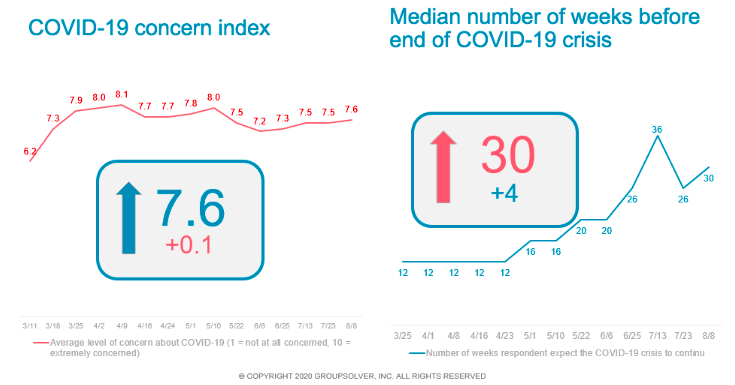
**Rasto Ivanic, GroupSolver: **_Why don’t we quickly review some of the longitudinal data we have been collecting from the beginning of COVID to begin? From the overall perspective of how people are feeling about COVID, nothing strange is happening here after the last dip a few weeks ago. Concern is slowly increasing as the cases picked up. And this correlates nicely with the chart on the right about expectations of how long this virus will last. But this may be a calm before the hurricane as we are approaching the opening of schools. That will be the real pressure test to see how far we have come in getting used to living with the virus. _
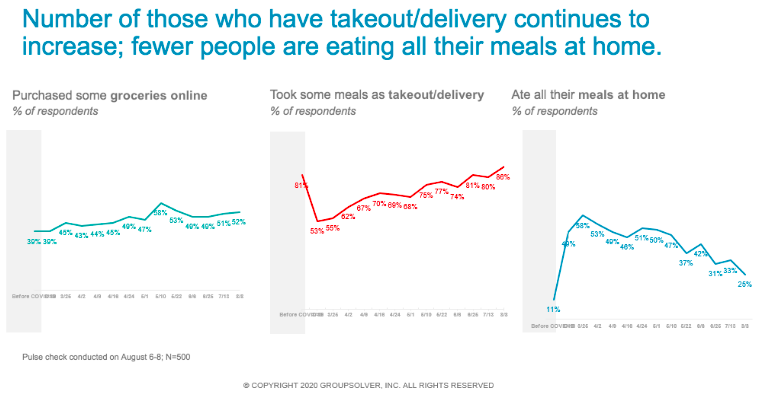
RI:_ Another __big-picture focus of this survey is what people are eating. Now that we have __watched key food __purchases __evolve __over many weeks, it is very clear to see the trends. Without a doubt there has been a growth of people purchasing groceries online. We are now past 50% __and __c__hances are that this __indicator will stay __up __as people __have __become more comfortable with this activity. In addition, people __have bounced up in their takeout and delivery purchases – __w__e __are __now at the pre-COVID level. Lastly, people aren’t just eating all their meals at home anymore. __I think __t__hese __three charts show __nicely our __adjustment __and adaptation __to __our new __reality. **Carrie Shea, IRI: **
I do wonder what is going to happen in the fall in the northern states as it will be more difficult to be eating outdoors [in restaurants]. By October, that may start shutting down again. Will people start eating home again and ordering takeout, or will they venture into restaurants with masks on?**
Mary Cooper, IRI:**
** **
** **S__ome_ fast food restaurants are really gearing up with their delivery arrangements and drive-through capacity. With time, some of these restaurants are getting more organized with ways to serve their customers. RI: Would you say that __the __carry-out and delivery industry have adjusted then?_**MC: **I am seeing lots of shifts. Even just driving around you can see lots of restaurants putting tents up. People are standing outside to take orders to provide more drive-through capacity, and so on. I think a lot of these places have adapted because if they don’t, their competition will win in the marketplace.
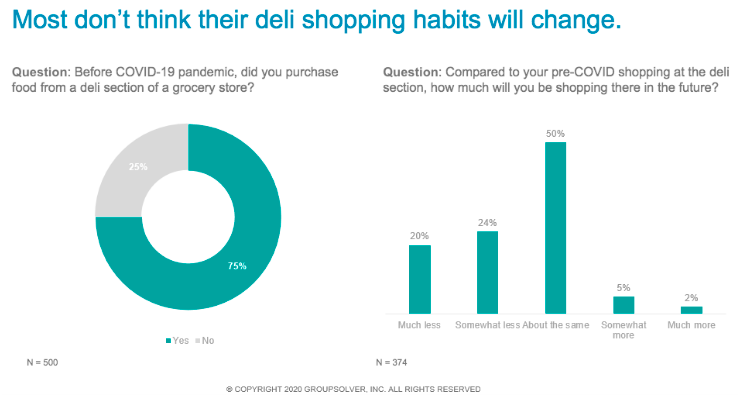
**RI: **Let’s_ fast forward to our data about the deli section and meat industry.__ We had about 75% of our respondents who stated that they have purchases from the deli section before COVID. We then asked those consumers a follow-up question about their expectations. I’m sure thi__s doesn’t come as a surprise, Mary, that this skews to buying less in the future.MC: Yes, I’d expect some people to be more comfortable purchasing products that have been sealed at the manufacture level as opposed to the local handling. I’m also surprised that the self-service salad and hot bars are opening again too in some stores._
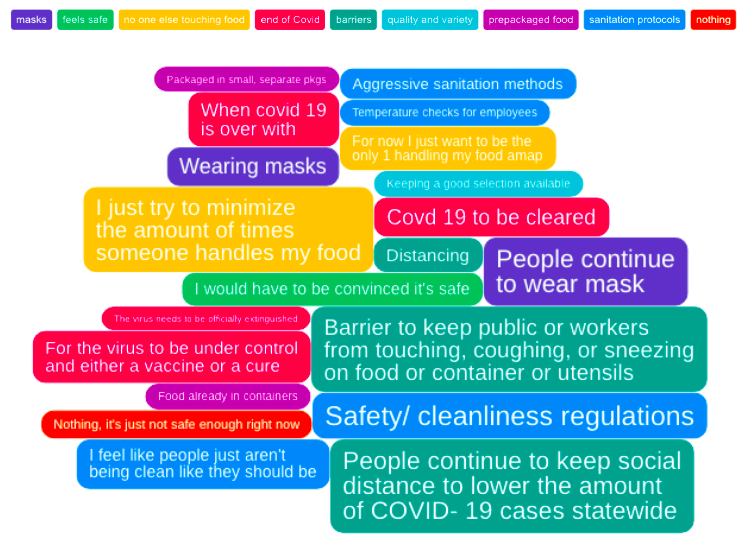
RI:_ Do you think people have found a balance with what __level of __food exposure to the “elements” they are comfortable with in grocery stores? **MC: **A big group of people are in the groove and have ad__a__pted their purchase behavior__s because they’ve been doing this for a couple of weeks or months now. RI: We asked those who __are __less __likely to buy from the deli section in the future what they’d want to change to start purchasing as often as they did in the past. Their answers were fair__ly predictable: __t__hey __want barriers, masks, sanitation practices, and things like that. What’s comforting though is that it is not all gloom and doom. __The__s__e __are clearly things that grocers can __affect __to make their customers feel safer in the deli section.Question:
What would have to change for you to shop at the deli section at least as often as you did in the past? _
 IdeaCloud™
RI:_ Let’s talk a little bit about meat. We asked respondents if they were aware of the struggles that the meat industry is going through, which a majority stated that they are aware. But a vast majority don’t think this is a permanent problem. When we then asked a follow-up question, it is obvious that there’s high awareness of the struggle. The good news is that people expect this to be resolved. _
IdeaCloud™
RI:_ Let’s talk a little bit about meat. We asked respondents if they were aware of the struggles that the meat industry is going through, which a majority stated that they are aware. But a vast majority don’t think this is a permanent problem. When we then asked a follow-up question, it is obvious that there’s high awareness of the struggle. The good news is that people expect this to be resolved. _
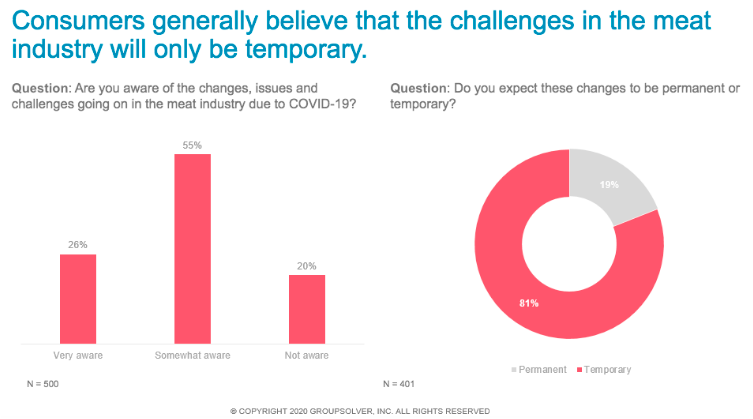
CS:_ I am surprised so many people think that this is only a temporary issue. Yet they are saying that it will be 30 weeks until we are out of the woods. I guess it depends on everyone’s definition of what ‘temporary’ means. Close to a year seems __long __to me!_**MC: **_The __national media has covered this __topic really well. And because so many people in this country do eat meat, this issue has gotten high visibility. __But I agree, __it is a good __question – __does 30 weeks seem temporary or permanent? Question:
In your own words, what is going on in the meat industry due to COVID-19? _
IdeaCloud™
_~ _
Carrie Shea is a Managing Partner at IRI Growth Consulting with a wealth of experience in growth consulting and consumer insights.Mary Cooper is a Senior Principal at IRI Growth Consulting with a focus on CPG and Retail.Rasto Ivanic is a founder and CEO of GroupSolver. _